Wedding flower seasonality is best treated as a planning advantage, not a strict rule. A bloom may be harvested locally for a short window, sourced from another region at a different time, or unavailable in a particular color when you need it.
The suggestions below describe common temperate Northern Hemisphere growing seasons, not live inventory. Availability depends on local climate, greenhouse production, imports and your florist’s wholesalers. Ask your florist to confirm the specific month and region.
January and February: texture and contrast
Winter bouquets often benefit from evergreens, eucalyptus, branches, long-lasting roses and contrasting foliage. Anemones and ranunculus may be available through specialty markets in some regions, while traditional spring garden blooms may need imports or substitutions.
Try ivory with deep berry, or mostly white with soft green. For a romantic winter look, ask about layered garden roses rather than assuming fresh local peonies can be sourced.
March and April: early spring energy
Depending on climate, anemones, ranunculus, tulips and other spring flowers can become more practical options. Early-season blossom branches may help an airy silhouette, but their behavior in a hand-tied bouquet differs from cut roses.
Keep a substitution plan if your date falls near the beginning or end of the flowering window. Weather can shift harvest timing from year to year.
May and June: romantic seasonal possibilities
In many temperate regions, late spring is associated with peonies and other garden flowers. Peonies often have a narrow local peak rather than a six-month continuous season. Check how tightly closed or open the florist expects them to arrive.
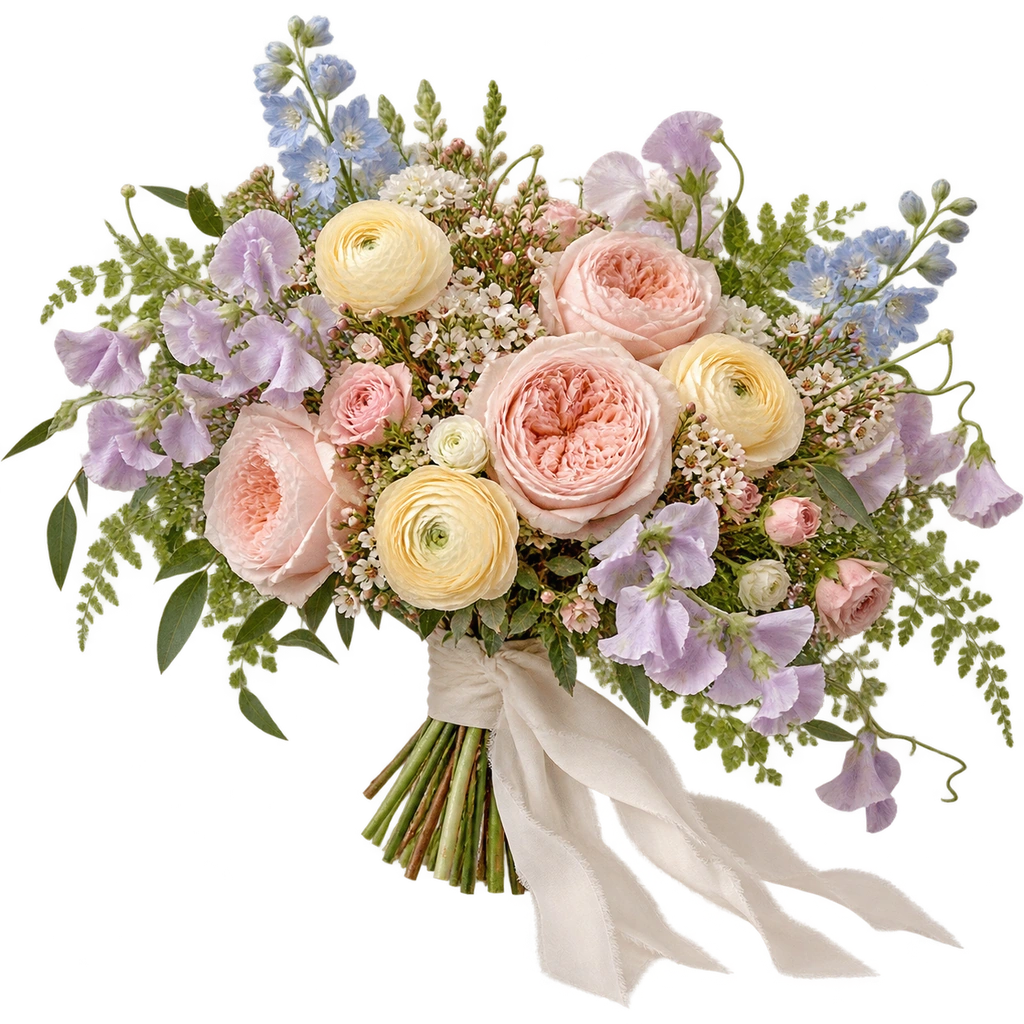
A simple blush palette of garden roses, ranunculus and peony-like focal forms can communicate the same spirit even if some varieties need replacing.
July and August: bold color and warm-weather planning
Summer may bring dahlias, zinnias and other field-grown flowers in many places, while garden roses and classic florist staples remain useful. Heat tolerance and transport become especially important.
For an outdoor ceremony, ask how bouquets will be hydrated, stored and kept cool until photographs. The loveliest seasonal ingredient is not always the best option if it wilts quickly in your specific conditions.
September and October: late-season depth
In temperate climates, dahlias can be a fall highlight until frost, alongside seed heads, berries and autumn foliage. Colors such as peach, terracotta, soft yellow and burgundy can work even if you prefer a light rather than rustic palette.
Think about the visual role of each ingredient; if dahlias are unavailable, the palette can often be recreated using different flower types.
November and December: resilient focal flowers
As local outdoor options narrow, focus on what a florist can source consistently rather than insisting on a specific field-grown variety. Garden roses, standard roses, orchids, foliage, and carefully chosen textural stems can build elegant winter bouquets.
An ivory bouquet with touches of green or burgundy can feel seasonal without requiring evergreens or holiday-themed details.
Seasonality questions to take to your florist
Ask which flowers will be locally available for your date, what must be imported, how much lead time is needed, and which substitutes are most reliable for the same shape and color. A flower being labeled “in season” online is not a guarantee it can be sourced for a specific weekend.
Use our flower roles guide to decide what can change and then try a bouquet idea with those ingredients.
Plan it in PetalMeld: Choose a design, customize the flower mix for free, and export the free Florist Brief. Flower counts, colors and visual previews are planning aids; your florist confirms real materials and pricing.
Explore bouquet ideas →