If you have searched for a number of flowers to put in a bridal bouquet, the most useful answer is a range plus a recipe. Ten stems of garden roses and foliage can make a very different bouquet from ten tiny accent flowers. The number on its own does not tell your florist the finished diameter, weight or look.
Use the examples below to plan a direction, not to purchase exact quantities. Florists build three-dimensional bouquets with flowers at the front, sides and back. A top-view design and a supplier order will not necessarily have identical counts.
Start with the look, then count by flower type
Choose a shape first: a tight round bouquet is built differently from a loose garden-style or cascading arrangement. Decide on one dominant focal flower, one supporting flower and only the foliage needed for balance. Group the stems by variety rather than relying on one overall total.
A branching lisianthus stem or spray rose may carry several visible blooms. A large hydrangea head fills more visual space than one sprig of waxflower. Counting every visible bloom as a separate cut stem can produce a misleading estimate.
Three practical stem-count examples
These are deliberately simplified planning exercises, not standardized florist sizes. Actual bouquet fullness depends on bloom diameter, stem quality, mechanics and desired silhouette. For a professional wedding bouquet, ask the florist to adjust each recipe based on real flower dimensions.
Intimate illustration — 10 stems
- Garden roses3
- Ranunculus3
- Lisianthus2
- Eucalyptus2
Total: 10 planned stems
Classic illustration — 20 stems
- Garden roses5
- Ranunculus4
- Spray rose stems4
- Sweet pea stems3
- Eucalyptus4
Total: 20 planned stems
Fuller illustration — 35 stems
- Garden roses6
- Peonies5
- Ranunculus6
- Lisianthus6
- Sweet pea5
- Eucalyptus4
- Olive foliage3
Total: 35 planned stems
These are illustrative ingredients, not guaranteed final bouquet sizes or supplier orders. Verify with your florist.
A real PetalMeld example: Blush Romance
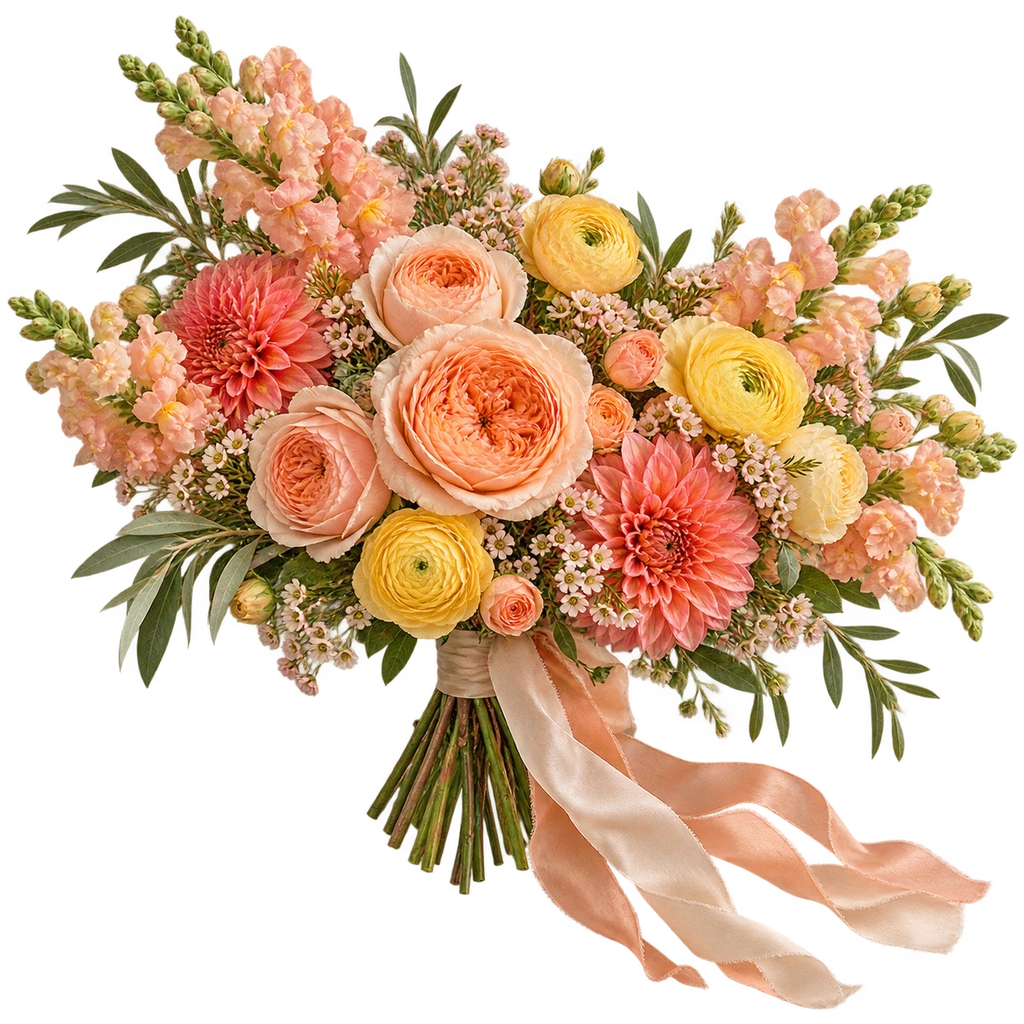
The Blush Romance preset models 4 blush peonies, 6 ivory garden roses, 6 ivory ranunculus, 5 blush lisianthus and 7 white sweet pea: 28 flowering or textural stems. It also includes 7 silver-dollar eucalyptus and 5 jasmine-vine stems: 12 foliage or trailing stems. That is 40 planned stems in the digital recipe, including allowances for the sides and back.
The graphic is an inspirational design rather than a literal inventory photo. Some included stems sit behind other flowers, and several branching stems show more than one bloom. Your florist may use fewer or more stems when recreating the look.
How to review the count with a florist
Show the whole bouquet image and your ingredient list. Ask which varieties are in season and available, which flowers are sold by the bunch, and whether the bouquet should be tighter or more airy. If a favorite bloom is unavailable, prioritize its color, shape and role rather than insisting on the exact variety.
If you are DIY-ing your bouquet, also ask your supplier about breakage, conditioning time and minimum orders. Stems left over from a bunch can potentially be reused for small arrangements, but do not assume a retail pack of flowers equals your final bouquet count.
Common stem-count mistakes
Avoid comparing a photographed bouquet to a digital design by tallying only the flowers visible from one angle. Avoid filling the entire arrangement with equally large blooms: smaller supporting material often makes focal blooms easier to notice. Finally, do not forget that binding, wrapping and adding a ribbon change the presentation without adding flowers.
Plan it in PetalMeld: Choose a design, customize the flower mix for free, and export the free Florist Brief. Flower counts, colors and visual previews are planning aids; your florist confirms real materials and pricing.
Explore bouquet ideas →