You do not need to know the names of every flower before you begin designing a wedding bouquet. Start with the feeling you want—airy garden flowers, a sculptural cascade or a compact classic shape—and make a few decisions in a useful order.
PetalMeld is a free design workspace, not an instant florist quote. It helps you visualize ingredients and share a brief, while a florist handles availability, mechanics and the final construction.
Step 1: choose a shape that suits the setting
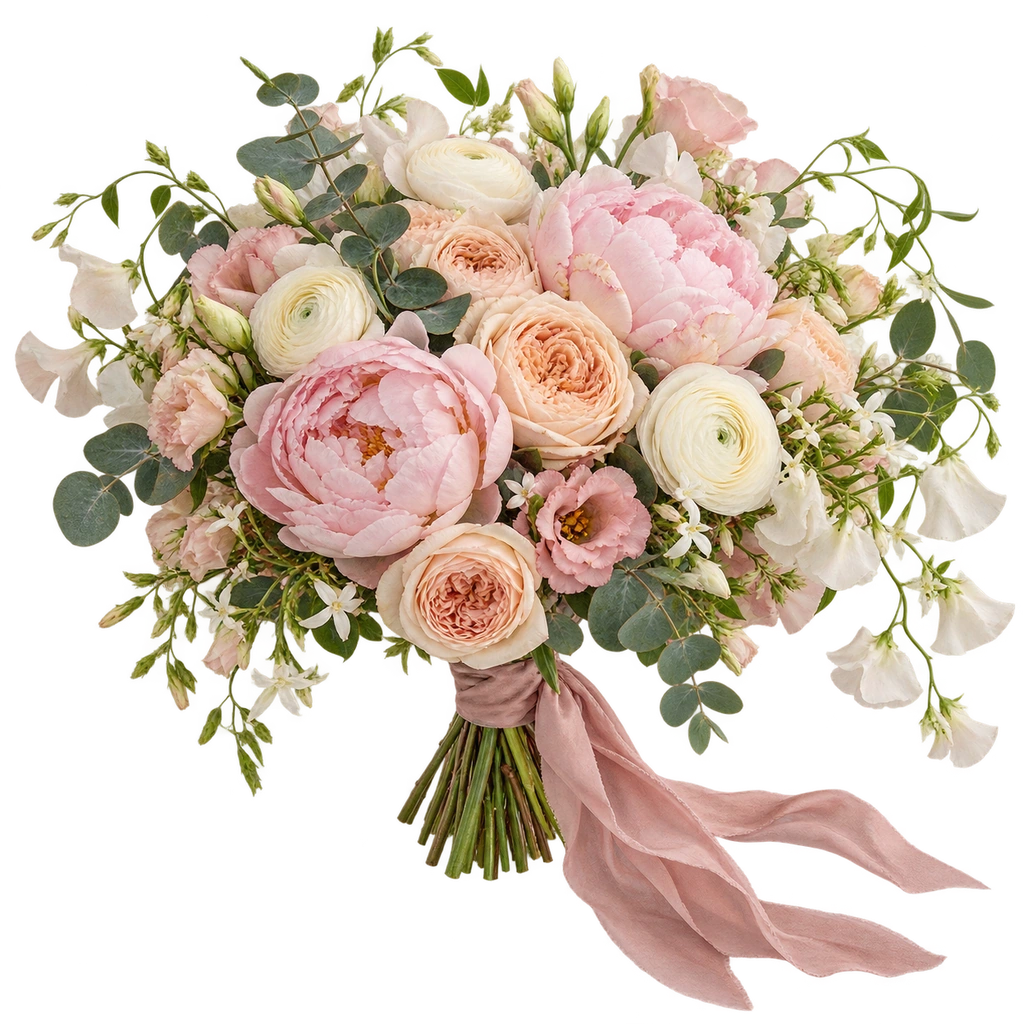
A round dome reads tidy and classic; a loose garden-style bouquet gains charm from off-center stems and varied flower heights. Cascading bouquets have a clear downward movement that needs careful physical balance. Think about the scale of the venue, the outfit and how the bouquet will be held or photographed.
Begin with a recognizable outline before adding detail. If the overall shape is not working, more flowers usually make it harder to diagnose.
Step 2: keep the palette intentional
Choose one dominant light or dark color, a supporting shade and a restrained accent. Ivory with blush is softer than evenly distributing pink, yellow, blue and coral; a dramatic burgundy accent works best when the surrounding flowers give it space.
Consider how the arrangement will photograph against the clothing. Similar colors can look beautiful together, but a bouquet that exactly matches a dress may disappear visually unless there is texture or an outline of greenery.
Step 3: build in layers, not random stems
Start with focal blooms such as garden roses, peonies or dahlias. Add smaller ranunculus, lisianthus or spray roses to bridge spaces. Use movement from sweet pea, trailing vines or airy fillers only where it contributes to the silhouette.
Use greens deliberately: a few eucalyptus leaves can outline a bouquet, while a wild garden design may call for olive, fern or finer foliage. More foliage is not automatically better. PetalMeld lets you adjust each ingredient rather than locking you into a picture.
Step 4: review the bouquet at a real-world scale
If a focal flower is huge on screen, make sure its apparent size reflects the bloom you would ask a florist to use. A peony, ranunculus and waxflower branch have very different scale relationships. Look for a readable main cluster and enough breathing room at the edges.
Digital stem counts are a planning reference; your florist needs to check dimensions, bouquet diameter, number of blooms per stem, and the cost of construction. Our stem-count examples explain why a preset is not a strict shopping list.
Step 5: turn your vision into a usable florist conversation
Save the flower mix and generate the free Florist Brief. It should communicate the general look, priorities and possible substitutions. Ask the florist how a fresh version would differ from a top-view illustration, especially if the recipe includes out-of-season flowers.
An optional paid Photo Preview can help you imagine a more realistic design interpretation. It is AI-generated and is not a guarantee of the finished bouquet. You do not need to buy a preview to create and share your plan.
Plan it in PetalMeld: Choose a design, customize the flower mix for free, and export the free Florist Brief. Flower counts, colors and visual previews are planning aids; your florist confirms real materials and pricing.
Explore bouquet ideas →